
Greenlit Platform
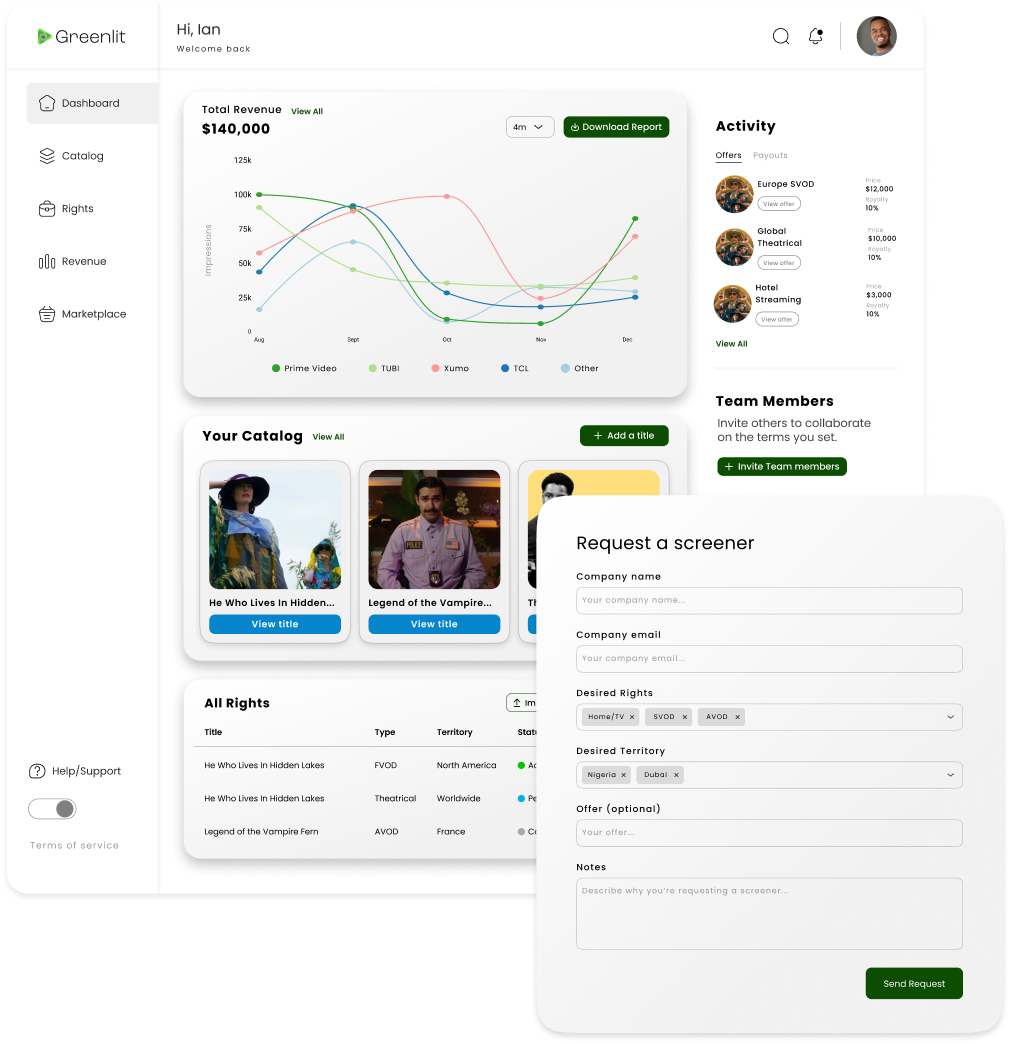
Defining the product before designing the platform.
Greenlit began with a broad thesis: film rights and revenue management was overdue for a modern operating model. Deal terms, ownership relationships, and payment waterfalls were still being managed across aging software, spreadsheets, contracts, and institutional knowledge. Blockchain could create a verifiable record of those relationships and automate how revenue moved through them; emerging AI capabilities could reduce the legal and administrative work required to set them up.
As Lead Product Designer and an early member of the founding team, I partnered closely with the CEO to turn that thesis into a product. I owned the path from discovery through product definition, UX architecture, design direction, and the v1 experience—while continually testing whether the opportunity was strong enough to support a business.
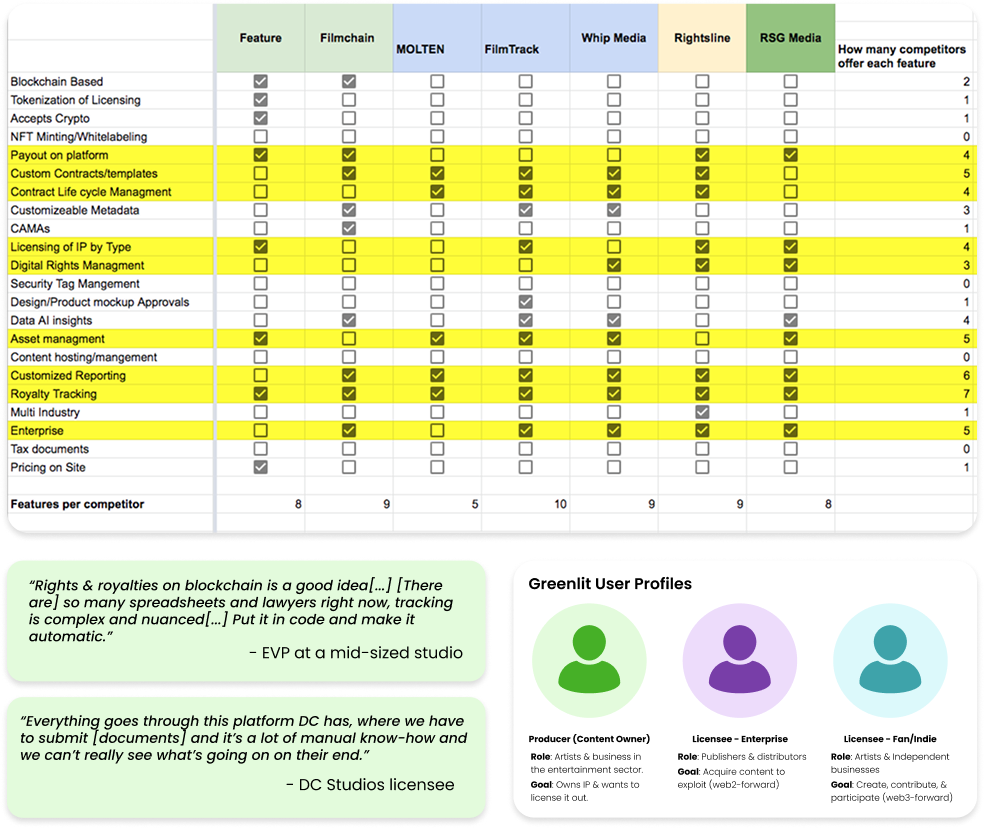
Building the roadmap from evidence, not assumptions.
Before committing to features, we mapped the market through interviews, competitive analysis, conference research, and ongoing conversations with producers, distributors, sales professionals, and other potential customers. At NFT.NYC, the Film3 Summit, film markets, and industry events, we used a lightweight interview guide to keep informal conversations focused on the same questions: where work broke down, what people trusted, what they had already tried, and what would make switching systems worthwhile.
I synthesized qualitative patterns with directional data on roles, workflows, tools, and technical comfort. That work clarified both the product opportunity and the adoption challenge. The market was underserved, but its reliance on legacy tools was not simply a design failure; those tools were embedded in high-risk, relationship-driven workflows where familiarity carried real value.
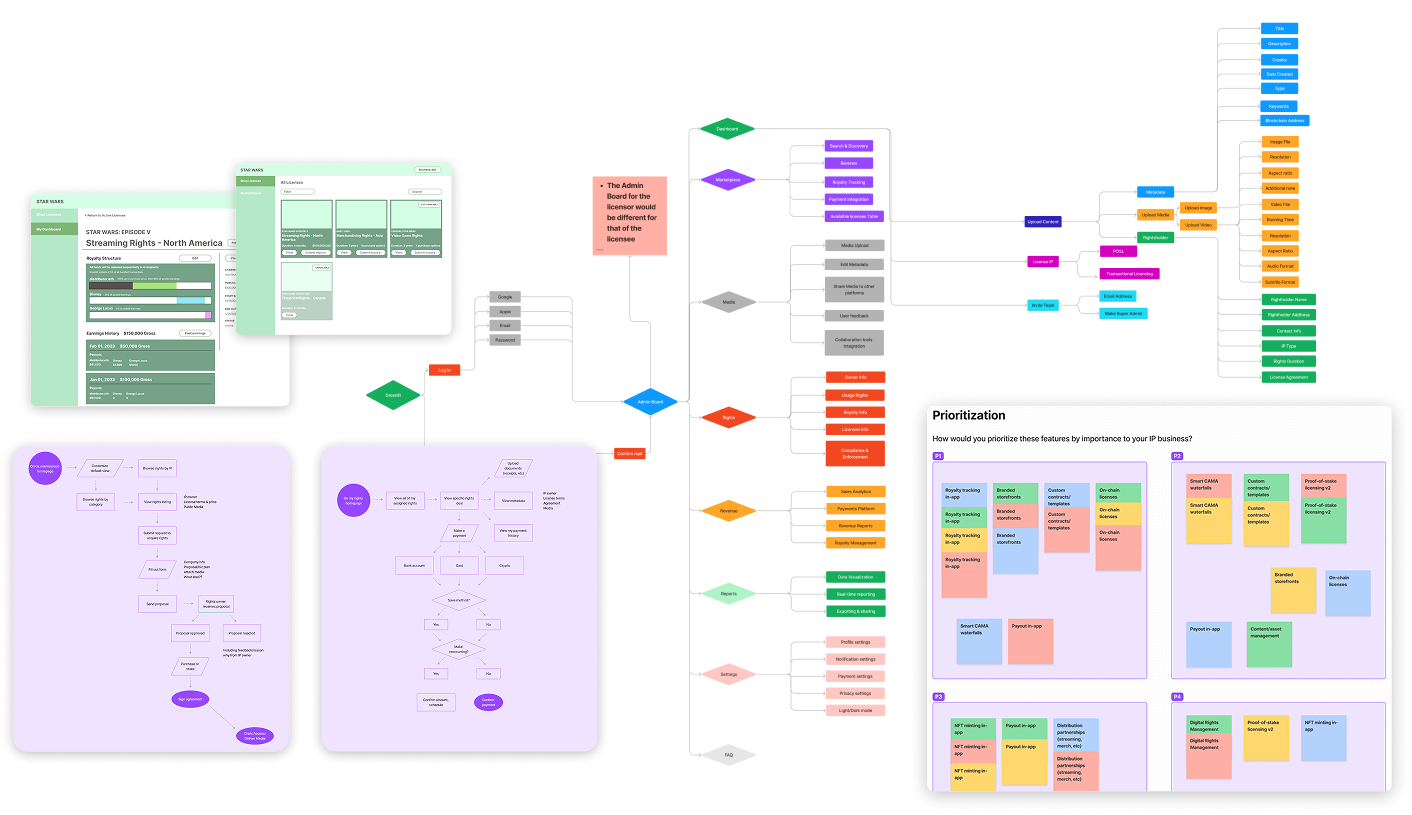
Turning a complex market into a coherent product model.
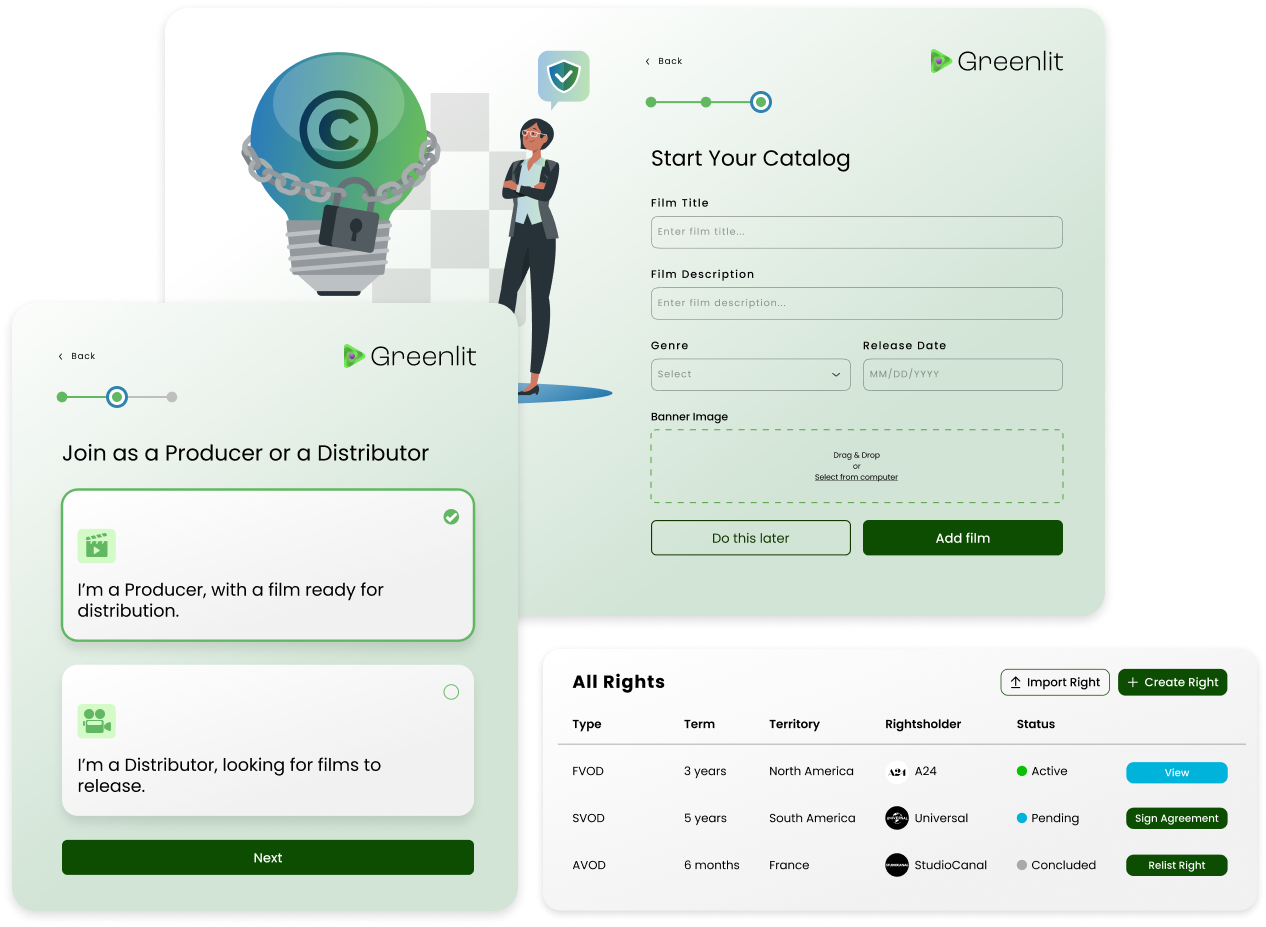
The research gave us a basis for choosing audiences, prioritizing problems, and defining the platform around real work. I translated what we learned into user profiles, core jobs, feature priorities, user flows, information architecture, and product requirements. The resulting model connected a film catalog to the agreements, rights, participants, and revenue activity surrounding each title.
That structure was the essential UX challenge. Users needed to understand who held which rights, under what terms, across which territories and time periods—and how incoming revenue should move through a changing network of obligations. I designed the system to reveal those relationships progressively, giving users a clear operational view without flattening the complexity that made the records meaningful.
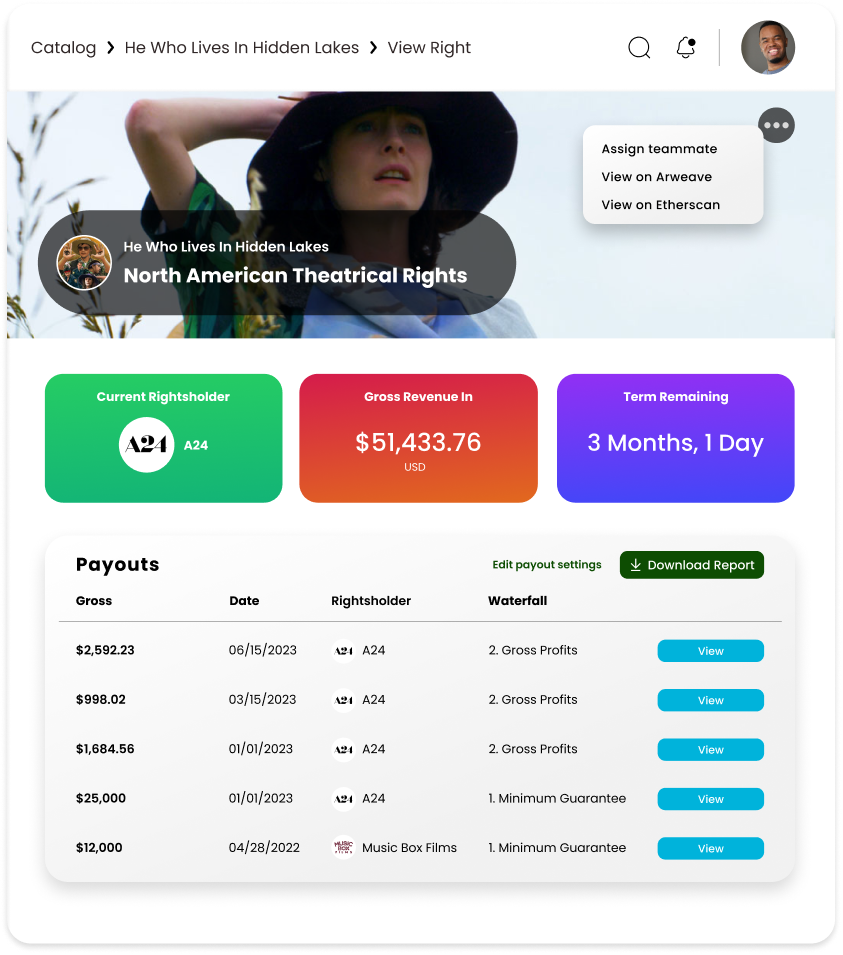
Making advanced infrastructure feel like practical software.
Greenlit’s value depended on sophisticated infrastructure, but the experience could not ask film professionals to think like blockchain users. I treated the technology as an implementation layer rather than the organizing principle of the interface. Familiar concepts—titles, agreements, rights, participants, requests, and payments—anchored the product while on-chain records made ownership and transactions more secure and verifiable behind the scenes.
The same principle guided our early AI concepts. Contract assistance was framed around drafting and reviewing deal terms inside the workflow, not around novelty. Across onboarding, catalog setup, rights management, and revenue reporting, the interface explained consequential information at the moment it was needed and made the state of each workflow explicit.
Leading v1 from product direction through execution.
Once the product model was stable enough to design, I set the experience direction and managed a freelance product designer through the v1 build. We divided hands-on design work while I maintained the larger system: prioritizing flows, resolving product questions, reviewing work, and keeping the interface aligned with the research and business thesis.
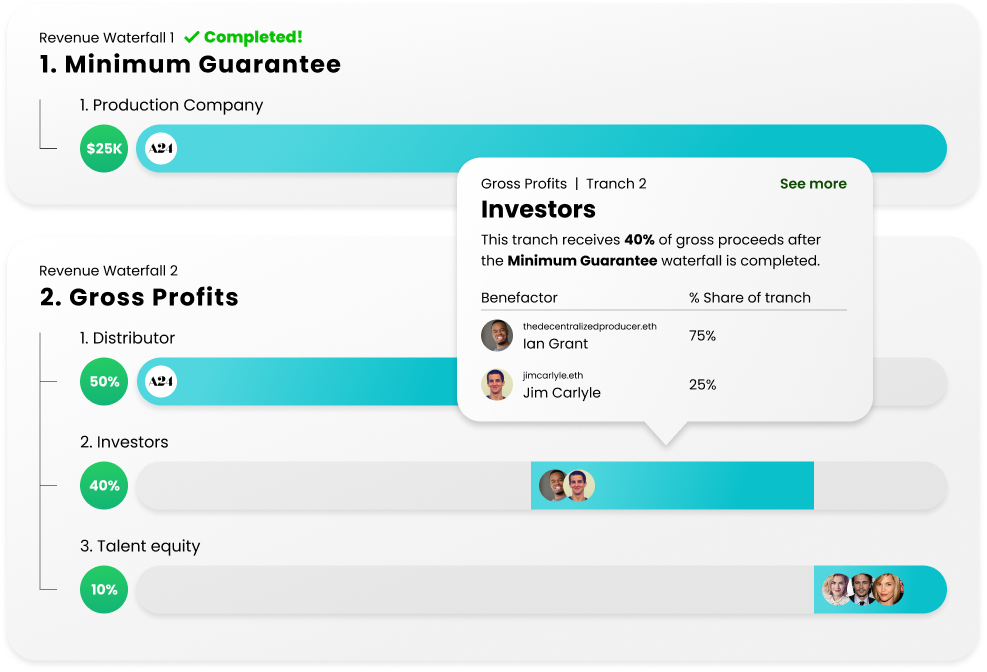
The v1 brought catalog management, rights visibility, contract workflows, screener requests, and revenue reporting into one connected experience. Its revenue waterfall made a particularly opaque process legible: users could see how a deal progressed through recoupment and profit tranches, which participants were owed, and how each payment was calculated before funds moved automatically.
The product lesson was larger than the interface.
Greenlit established a credible product vision for modern rights and revenue management—and the discovery work also exposed the limits of the original strategy. In film, legacy software persists partly because established workflows reduce perceived risk. As enthusiasm around crypto cooled, asking customers to adopt a new platform and a new financial model at the same time became a substantial go-to-market hurdle.
The company ultimately chose to pivot toward more conventional production management software. I agreed with the strategic reasoning and stepped away rather than begin a second 0–1 cycle. That experience sharpened how I lead product work: strong design can make a complex system clear, but product leadership also means recognizing when market behavior, positioning, and adoption risk matter more than the quality of the interface.